The Real Cost of Missed Calls for Plumbers
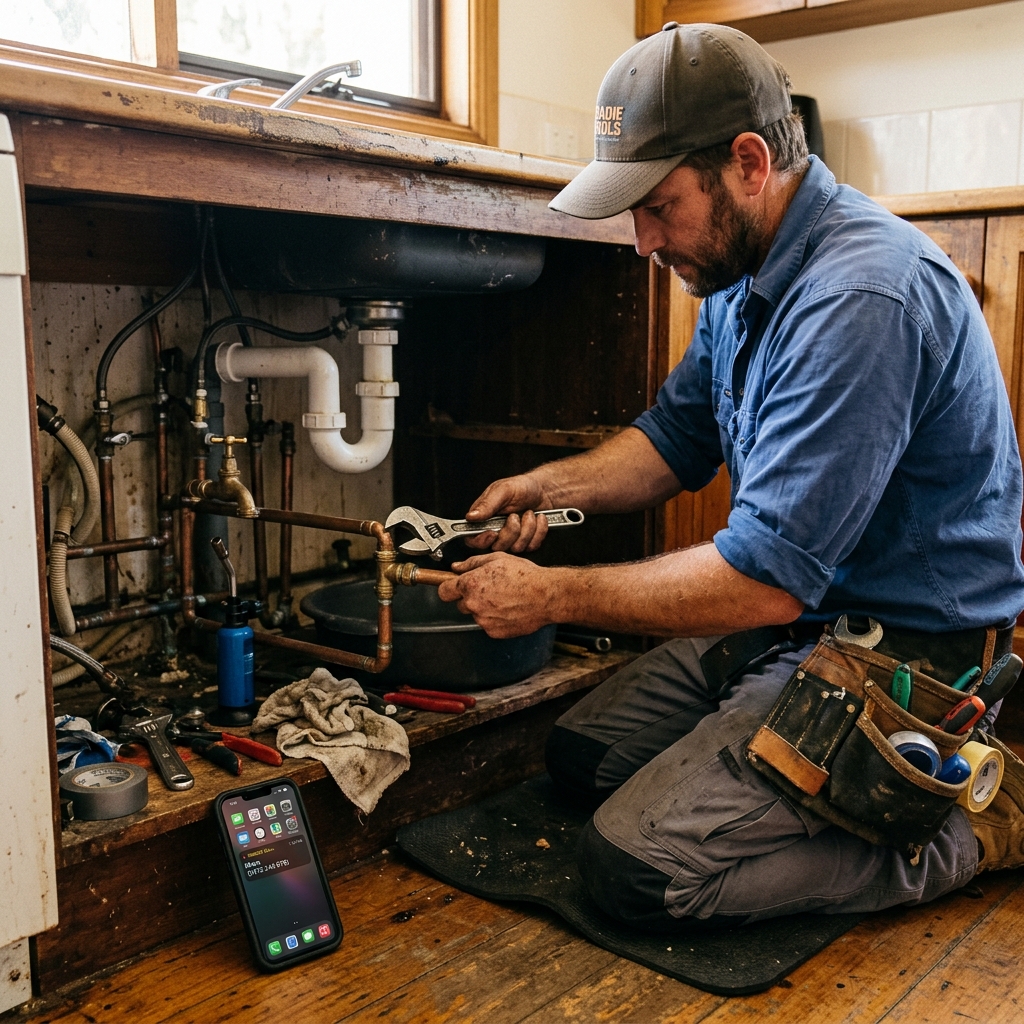
Plumbing is an inherently hands-on trade. When you are under a sink, covered in grime, or driving between jobs in heavy traffic, picking up the phone is often impossible. For solo operators or small teams, the phone usually rings straight through to voicemail. The problem is that customers experiencing a plumbing issue rarely want to leave a message. If they have a blocked drain or a leaking pipe, they need reassurance and a booking immediately.
Consider a realistic scenario: it's 2am and a customer wakes up to find their hot water system has burst, flooding the laundry. They aren't going to wait patiently for a callback at 8am. They will simply move down the list of search results until someone answers. This 'call-the-next-plumber' behaviour means that every missed call is effectively handing over revenue to your competition. The true cost isn't just the missed call; it's the lost lifetime value of a customer who might have used your services for years.
Why Plumbers Specifically Struggle with the Phone
Unlike an office environment where a phone is always within arm's reach, a plumbing site is actively hostile to taking calls. You might be deep in a crawl space wrestling with decades-old pipework, or your hands might be covered in PVC primer and glue. Answering a smartphone in these conditions isn't just inconvenient—it can risk damaging an expensive device.
More importantly, it's a safety issue. When you're working on gas lines, handling heavy equipment, or navigating treacherous roof spaces, your focus needs to be entirely on the job at hand. Pulling out your phone breaks that concentration. Even when driving between jobs, safely pulling over to take down address details and book a job can disrupt your schedule and increase the stress of an already packed day. Plumbers need a solution that works seamlessly in the background while they focus on the actual trade.
The After-Hours Emergency Goldmine
Plumbing emergencies—burst pipes, severe gas leaks, overflowing toilets—do not respect a standard 9-to-5 schedule. In fact, for many trade businesses, after-hours jobs represent a highly profitable opportunity. Because standard competition drops off significantly after 5 PM, customers are highly motivated and willing to pay premium emergency rates.
It is not uncommon for after-hours emergency callouts to command rates of $250 to $400 or more just for the initial attendance. However, most tradespeople understandably put their phones on silent to get some rest. By implementing a system that operates 24/7, plumbing businesses can capture these lucrative after-hours jobs without losing sleep. If the call is a genuine emergency that warrants waking up, it can be escalated directly to you. If it isn't, the booking is safely secured for the next day, locking in the revenue while you rest.
Common Plumbing Emergencies and AI Triage
Not all missed calls are equal, and treating them as such is a fast track to burnout. A customer wanting a quote for a minor bathroom renovation can certainly wait until the morning, while someone with a burst water main needs immediate, decisive action. Traditional answering services often struggle to distinguish between the two, leading to either missed emergencies or unnecessary wake-up calls.
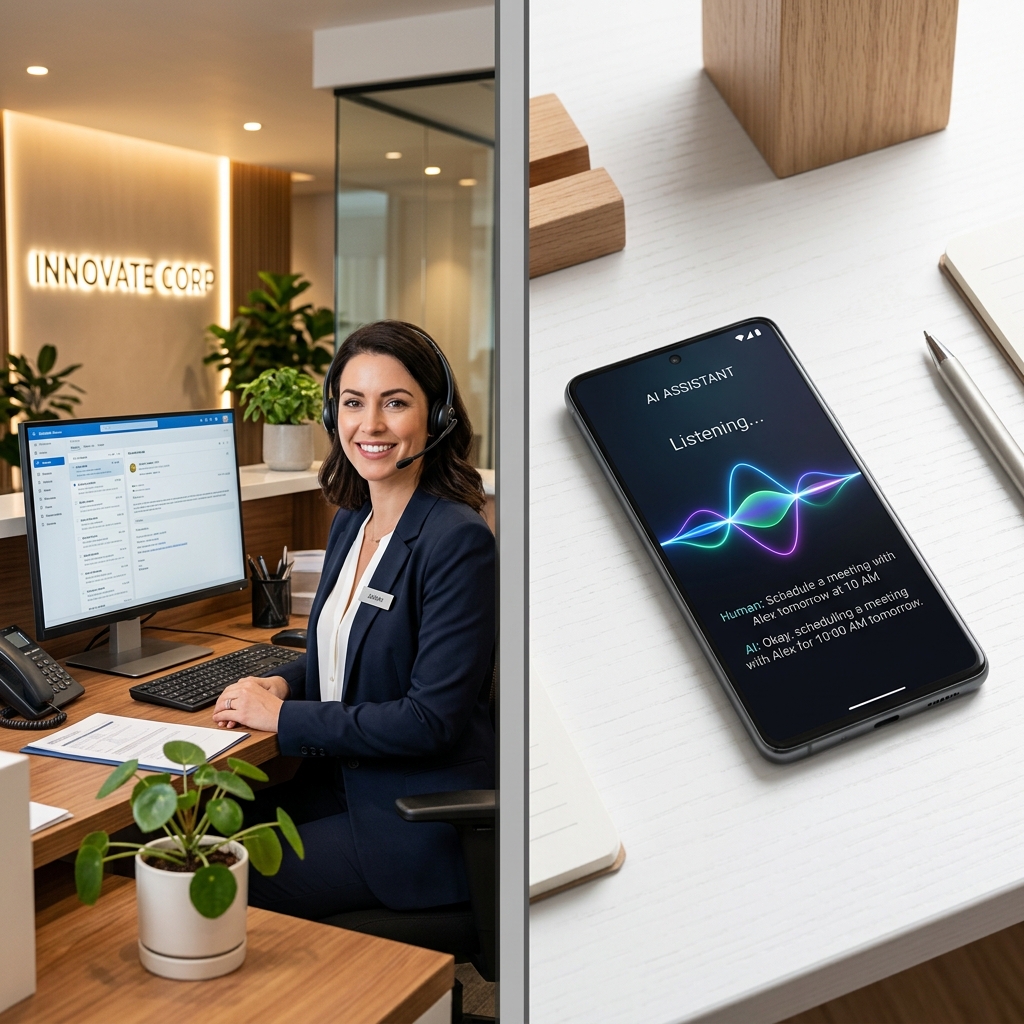
A modern AI receptionist can be explicitly configured to handle trade-specific triage. For example, if a caller mentions a burst pipe, the AI can instruct them to turn off their water main immediately to mitigate damage, before escalating the call to you via SMS. For a suspected gas leak, the AI is programmed to advise the caller to evacuate safely and contact emergency services (000) if necessary, before alerting you. For less critical issues like a hot water failure in summer or a partially blocked sewer, the AI can calmly collect the customer's details and book an appointment directly into your calendar.
How an AI Receptionist Handles a Real Call
Let's walk through exactly how this looks in practice. A customer discovers a severe leak under their kitchen sink at 7 PM on a Thursday and calls your business number. Instead of hitting voicemail, the call is answered immediately by a natural-sounding Australian voice.
The AI asks how it can help. The customer frantically explains the leak. The AI recognizes the urgency and calmly asks for their address and contact number, reassuring them that a plumber will be notified immediately. It then instantly fires an SMS to your mobile with the details: 'EMERGENCY: Severe sink leak at 12 Smith St. Customer: John (0400 000 000)'. You see the text, realize it's a high-value emergency, and head straight out. For the customer, the experience is seamless and reassuring; for you, it's a highly profitable job secured with zero administrative effort.
Booking and Scheduling Challenges
Managing a plumbing schedule is notoriously difficult. Jobs overrun, parts need to be fetched from the supplier, and travel time between suburbs can fluctuate wildly due to traffic. Trying to manage this dynamic puzzle while actively working on the tools is a major source of stress.
An AI receptionist helps alleviate this by integrating directly with your digital scheduling tools like Cal.com or Google Calendar. You can define specific blocks of time for routine maintenance or quoting, and the AI will only offer those slots to non-urgent callers. This prevents double-booking and ensures that your fixed-price quoting work doesn't interfere with your high-priority emergency availability, creating a smoother, more manageable work week.
The Voicemail Problem: Why Customers Hang Up
Many tradespeople rely on voicemail, but in the modern service economy, voicemail is effectively a dead end. When a customer is standing in front of a blocked, overflowing toilet, they are experiencing acute stress. The sound of a voicemail greeting does not provide reassurance; it only increases their anxiety.
They know that leaving a message means waiting indefinitely for a callback, while water damage is potentially getting worse every single minute. The overwhelming instinct is to hang up and immediately dial the next number on their Google search. By relying on voicemail, you are not just missing a call; you are actively encouraging the customer to hire your competitor.
Cost Comparison: What You're Paying vs Losing
It's easy to look at the monthly fee of an AI answering service and view it as an additional expense. However, the true financial picture requires looking at the opportunity cost of doing nothing. If your average job is worth $350 and you miss three realistic opportunities a week because you were on the tools or asleep, that example puts more than $1,000 a week of revenue at risk before applying your actual close rate.
Compared to the cost of a full-time human receptionist—which exceeds $60,000 annually under Australian award rates—an AI receptionist that charges a flat monthly fee is remarkably cost-effective. It can pay for itself when it secures enough booked work that would otherwise have gone to voicemail. To see exactly how these numbers stack up for your specific business volume, use our free ROI calculator.
Getting Started: Implementation for Plumbers
Transitioning to an AI receptionist is simpler than most tradespeople expect. The process typically involves setting up a dedicated forwarding number, meaning you don't need to change your existing business phone number. You simply set your current phone to forward missed or after-hours calls to the AI system.
From there, the system needs to be configured with your specific business parameters: your service areas, your emergency callout fees, and instructions on what constitutes a genuine emergency that requires an immediate SMS escalation. With integrations securely linked to your Cal.com or Google Calendar, the system can typically be up and running, handling overflow calls after setup.