Why After-Hours Calls are Disproportionately Valuable
For Australian trade businesses, after-hours calls are not just overflow—they are often the most profitable jobs you can take. Standard hourly rates vanish after 5 PM, replaced by emergency premiums that are typically 1.5 to 2 times your standard day rate. But the value goes deeper than just the callout fee.
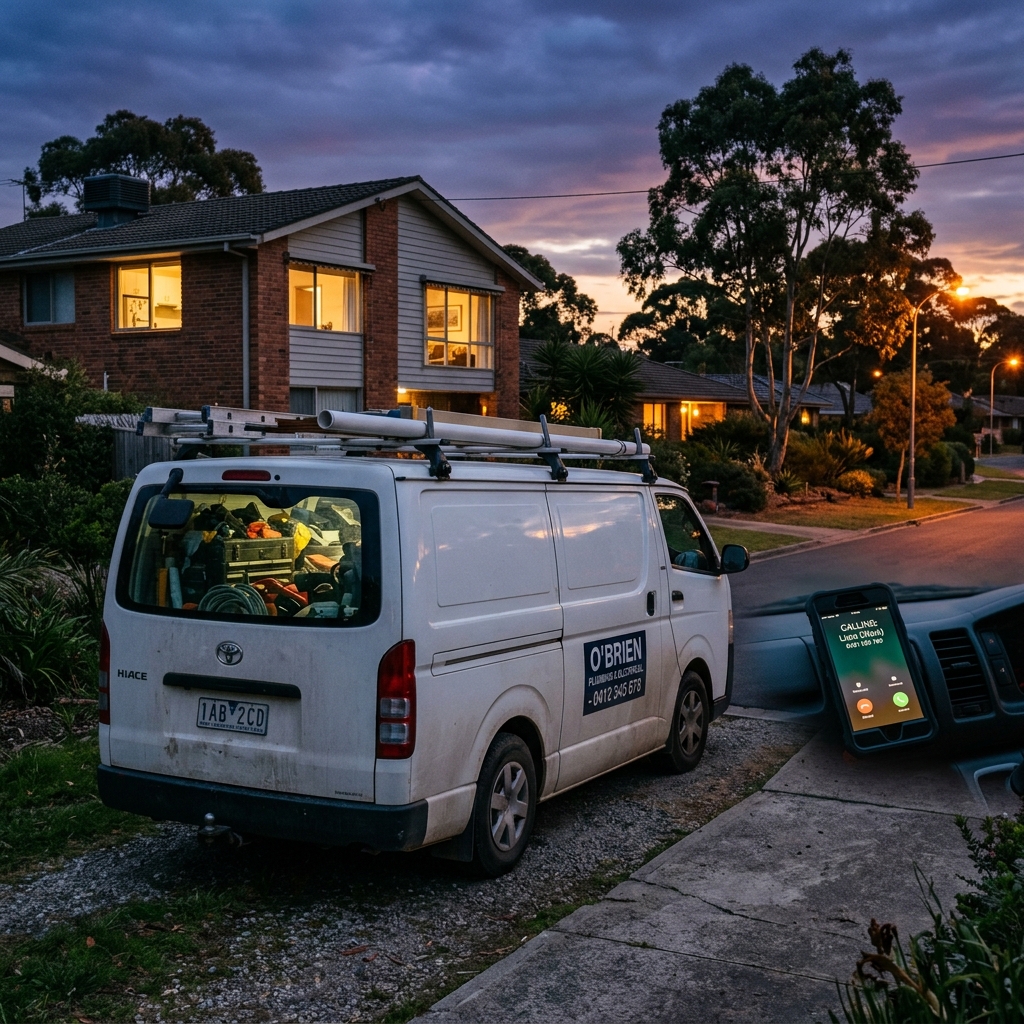
When a customer calls at 9 PM with a burst pipe or a power outage, they are not shopping around for quotes. They are looking for the first person who answers the phone and can assure them help is on the way. Competition drops dramatically at this hour. Most tradespeople turn their work phones off or let calls go straight to voicemail. By simply being the business that answers the call, you improve your chance of winning the job. The customer who calls at 9 PM with a burst pipe isn't negotiating on price—they are paying for immediate peace of mind, making these jobs exceptionally high-margin and highly convertible.
The Psychology of After-Hours Callers
To understand how to handle after-hours calls, you must understand the state of mind of the person calling. These are rarely casual inquiries. They have a genuine problem now—a blocked toilet before weekend guests arrive, no hot water in the middle of winter, a power outage with hundreds of dollars of food in the fridge, or an air conditioner that has died during a 40-degree heatwave.
These customers are not price shoppers. They are stressed, anxious, and want someone who answers immediately, understands their problem, and can confidently dispatch help. When they hear a professional voice that reassures them and secures a booking, their anxiety drops. If they hit a voicemail, their anxiety spikes, and they immediately dial the next number on Google. They don't want to leave a message; they want a solution.
The Real Cost Structure of Human After-Hours Coverage
Many trades consider hiring someone to handle after-hours calls, but the real cost structure of genuine 24/7 human coverage is staggering when you break it down. Let's look at the Fair Work Clerks Award (MA000002) penalty rates.
For a standard weekday evening after 6 PM, you are paying 1.5× the base rate (roughly $40.46/hr for an entry-level clerk). On a Saturday, it's 1.25× ($33.71/hr), on a Sunday it's 2× ($53.94/hr), and on public holidays, it skyrockets to 2.5× ($67.43/hr). If you calculate the annual cost of just covering evenings and weekends with a human receptionist, you are easily looking at tens of thousands of dollars.
Moreover, paying the wage is only half the battle. That person still needs to be awake, alert, fully trained in your specific trade terminology, and know exactly how to price and triage jobs at 2 AM. For a small trade business, this is almost never financially viable.
Why Voicemail is Completely Broken for After-Hours
The default solution for most trades is voicemail. Unfortunately, voicemail is fundamentally broken for after-hours emergency calls. Urgent callers often hang up rather than leave a voicemail when they need a clear answer quickly.
Think about it from the customer's perspective. A burst pipe customer isn't going to leave a message at 11 PM and politely hope you call them back in the morning while their house floods. They need to know someone is coming. Voicemail acts as a barrier, effectively telling the customer you are closed and pushing them directly into the arms of a competitor who has a better answering system.
Traditional Answering Services After Hours
If voicemail fails and human staff are too expensive, what about traditional answering services? These call centres provide a human voice, but they come with their own severe limitations. First, there's the cost. They usually charge per-minute pricing, and many pass those penalty rate surcharges directly on to you.
Second, the quality is often lacking. The operators are generic; they answer for a plumber one minute and a dentist the next. They don't know a gate valve from a ball valve. As a result, they usually just take a message rather than actually booking a job or accurately triaging an emergency. Finally, queue times in shared call centres mean response times are often 30-60 seconds—which feels like an eternity to a panicking homeowner with a flooded laundry.
AI Receptionist for After-Hours: The Flat-Rate 24/7 Solution
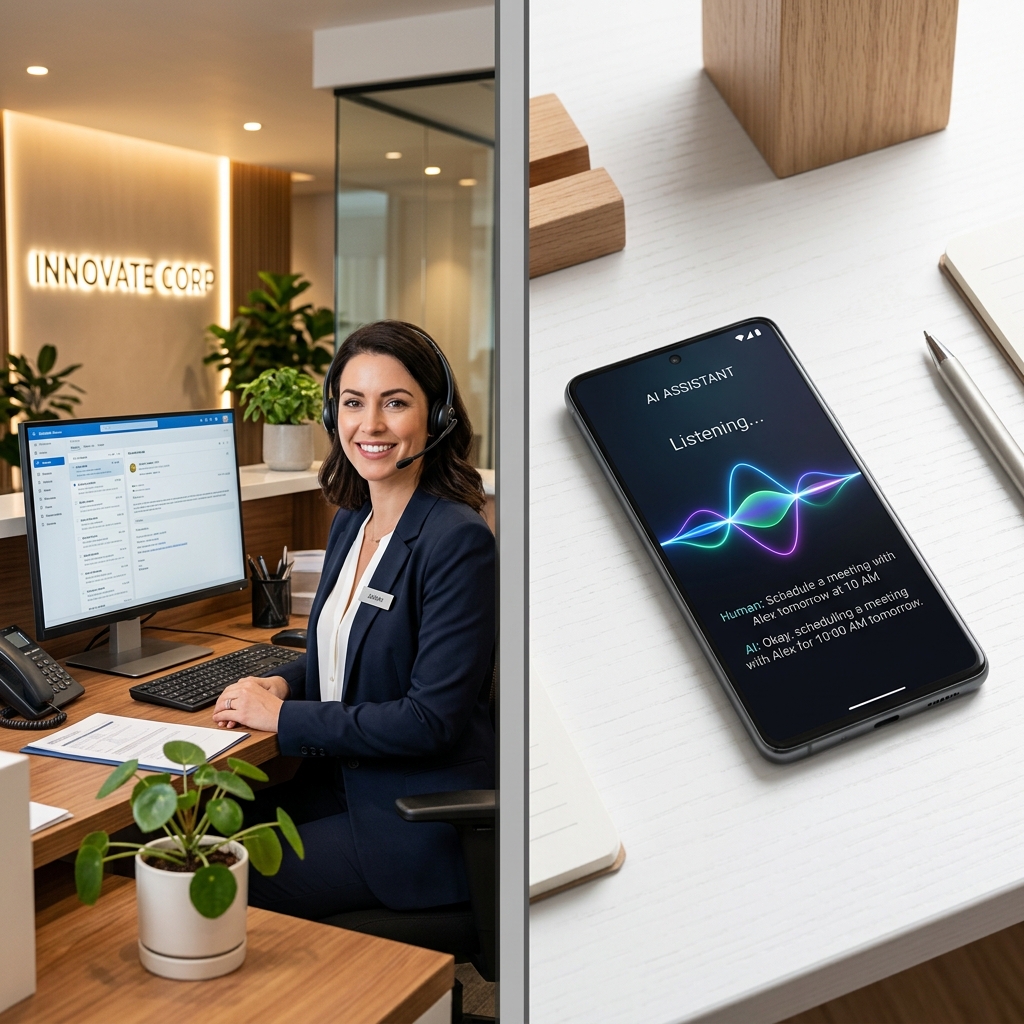
This is where an AI receptionist completely changes the landscape for trade businesses. An AI receptionist operates 24/7 at a flat monthly rate. There are no penalty rates, no per-minute fees, and no surcharges for weekends or public holidays. The system is designed to answer quickly and consistently, including after hours.
More importantly, an AI built for trades can actually triage emergencies. It speaks with an Australian voice, understands trade terminology, and books directly into your calendar. If it detects a genuine emergency, it can send you an immediate SMS with the exact details, allowing you to decide whether to roll out immediately or schedule the job for first thing tomorrow.
Real Scenarios: Walking Through Common After-Hours Calls
Let's look at how an AI receptionist handles real after-hours scenarios. Scenario 1: 10 PM Burst Pipe. The AI answers instantly. The caller says their pipe burst. The AI confirms the emergency, advises the caller to turn off the water at the mains to prevent further damage, and immediately sends you an urgent SMS with the details and address. You wake up, see the text, and head out to a premium emergency job.
Scenario 2: 8 PM Sunday. A customer calls wanting to book a bathroom renovation quote. This is not an emergency. The AI converses naturally, captures their details, and books a quoting appointment directly into your Cal.com or Google Calendar for Monday morning. You sleep through the night and wake up to a new lead.
Scenario 3: 6:30 PM Weekday. A customer asks about pricing for a ceiling fan installation. The AI captures the specifics of the request, provides a baseline estimate if you've configured it to do so, and books a callback for you during regular business hours.
How to Evaluate If After-Hours Coverage Pays for Itself
Evaluating the return on investment for after-hours coverage is a straightforward mathematical exercise. The framework is simple: estimate your missed after-hours calls per week, multiply by your average job value, and factor in a realistic conversion rate compared to the cost of your coverage solution.
A simple scenario can show whether the numbers make sense. If an AI receptionist helps secure one additional after-hours job, compare that job value with the monthly cost of coverage. Use the free calculator to plug in your own numbers and estimate the revenue at risk.
Setting Up After-Hours Coverage
Setting up an AI receptionist for your after-hours coverage is much simpler than hiring staff. The practical setup usually involves configuring basic call forwarding from your existing business number. You can set conditional forwarding so that during business hours, the phone rings to you first, and if unanswered or if it's after hours, it routes directly to the AI.
You will then configure your emergency escalation rules. You define what constitutes an emergency (e.g., 'no power', 'flooding', 'gas smell') and instruct the AI to immediately SMS your mobile when these keywords are detected. For non-emergencies, you simply connect the AI to your Cal.com or Google Calendar. Many businesses start with a trial period to see how the AI handles their specific call types before fully committing.
Frequently Asked Questions
Here are some of the most common questions trades ask about after-hours AI coverage.